Friday, July 31, 2015


Savoring August as a Family

By: Jamie Perillo, LPC

I was recently asked to make a list of ways to help kids with back to school anxiety, which I will share with you – but not today. Tomorrow is August first. If you live in the Northeast kids begin to head back to school beginning of September or the end of August (grimace). You and your kids can think about this in two ways: we only have a month until school starts or we still have a month left. Which one feels better? I prefer the latter.

Today kids are busier than ever, which means so are you. Between over scheduled activities and school’s increasing demands, I am seeing more anxious, overwhelmed, and stressed –out kids in my psychotherapy office. So, today, instead of writing about how to make the transition back to school easier I am writing about embracing summer this month.

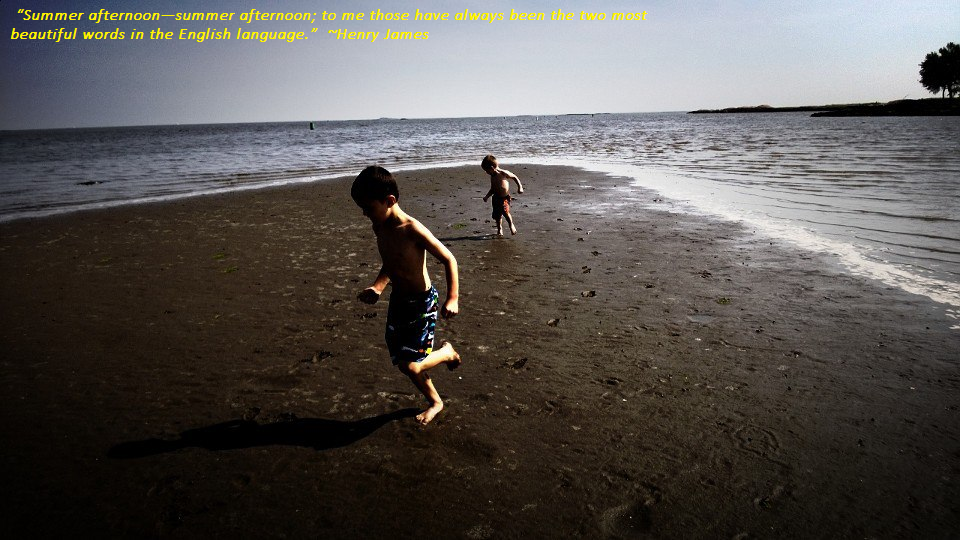
Summer is the season of Abundance. Grab your flip flops and picnic baskets and head to the beach basking in the sun, jumping in the waves, resting in the arms of a summer’s breeze. Frolic with your kids through the freshly cut grass, play ball, jump in the pool, peruse the local famer’s markets and make a meal together savoring all of summer’s bounty. Rest under a tree, bare feet grazing through the grass and reading your favorite book. This is summer in all of its glory - a time to exhale, unwind, and recharge. You deserve it and so do your children. 

I am not telling you to procrastinate the inevitable – I am asking you to enjoy the present. If your kids are excited to get their lunchboxes and backpacks by all means do it, but then put them away. Return to summer. This August I invite you to practice being in the moment – you and your family will feel relaxed and happier.

6 Ideas to Help You Savor Summer:

1. On index cards make a list of reasonable summer activities you and your family would like to do. Have each person place the cards in order beginning with their favorite activities and moving down. As a family decide which activities you would like to do throughout the month. Remember, this isn’t a plan to “go, go, go,” - make sure to leave time for lazy summer days because some of the best memories occur during unplanned time.

2. Practice presence. Breathe. Inhale. Notice the scents of freshly growing flowers, barbeque, newly cut grass, and salty ocean air. Exhale. Feel your feet on the grass or sand.

3. Express gratitude. What you are thankful for grows.

4. Take it slow. Schedule lazy days. Unscheduled down time allows for kids to use their creativity and imaginations.

5. Parent from your CORE. Take a moment to imagine what summer, ideally but realistically would look like for you and your family. How does that feel? Can you make a few small changes to get closer to that image?

6. Enjoy! Embrace your inner child with your family.


Monday, October 21, 2013

Fill Your Cup

     It’s easy to get pulled into the everyday routines of caring for your kids or others, focusing on work and deadlines - the last thing you think to do is care for yourself. When you take care of yourself, you take care of your family - something I call filling your family’s cup. By doing something that feeds you, you are feeding your family.  You will have more energy, enthusiasm, and emotional presence. Doing something for yourself can be as simple as a quiet  cup of tea, hike or walk on the beach, ten minutes to read the news, talk with a friend, date night, basketball game, or yoga class.
     This week I challenge you to do one thing for yourself each day. Schedule it as an appointment or a meeting and do not cancel. You deserve it. You are worthy of your own love.

Share with us what you will do for you this week!


Blessings and Love,
Jamie

Thursday, October 3, 2013

The Black Dot: How to Shift Your Negative Thought

The Black Dot
By Jamie Perillo, LPC

     When I was twelve I attended a holiday service with my mother. We were shown a large white poster board with a black dot in the center and were asked, “What do you see?” At twelve, not too happy to be there on a Saturday afternoon, I remember thinking this was a silly question. ” I see a black dot. There’s nothing else to see."

     I was gratefully proven wrong.  The speaker explained, “You have two choices.  You can see the black dot or you can see a large piece of beautiful white paper with lots of room to write on.” In life, we have a choice – we can focus on the negative or we can try to see the positive. We have the choice to fixate on the black dot or see beyond the dot and open our mind to all of the possibilities the situation might bring.

     When children come in anxious or stuck in negative thinking patterns I show them the paper with the black dot. Initially I am met with the same, “Are you kidding me?” look I gave many years ago. But as I explain the purpose in the exercise their eyes brighten and the lesson is understood.
If your child is having difficulty stuck in negative thought patterns or anxious, try showing them the paper with the black dot.  It will be a lesson that sticks with them years later.

Tuesday, April 16, 2013

How to Talk to Your Kids About Tragedy in the News

How to Talk to Your Kids About Tragedy in the News


I am saddened to have to post this today. It seems in the past twelve months I've posted something similar too much. It's overwhelming. I've already spoken to parents who are saying, "Parenting feels so difficult today. How do I explain this?"

Parenting is difficult, especially when events like the tragedy in Boston yesterday occur. You want to shield your child's innocence, and protect them from worry and fear - all while you are whirling inside with anger, sadness, or worry.

Here are some tips to talk to your child about tragedy in the news:

1. Before you talk to your child or answer any questions, check in with your own feelings. Take a deep breathe. Be honest with yourself because children are perceptive and they will notice too. It's okay to say, "Mommy feels sad for the people who were hurt." Follow up, with a positive statement for your child, such as suggesting a way to volunteer help or a reminder of why your child is safe.

2. Explore your child's thoughts. If they ask a question inquire further. Find out what they know and how they feel about it - don't assume. Kids talk and have great imaginations - check in with what they know. (Ask without providing too much detail)

3. Validate your child's feelings with statements such as, " It was a scary event." Statements such as "Don't worry about it, you don't need to feel scared, or "get over it" are not helpful.
 

4. The news can make events that are uncommon feel as though they happen everyday everywhere affecting a child's sense of safety. Talk to your child about the news, how they focus on such events, and remind your child such disasters are not as common as the news may make it sound. Shield your child's exposure to the news.
 

4. Get concrete. Talk numbers. For example, how many marathons occur every year and how many people were safe. Remind your child they are safe and why.
 

5. Keep explanations simple and age appropriate.
 

6. Check in with your teens. With technology today it is quit likely they have been exposed to information about the tragedy. Talk to them.
 

7. Invite your child to get involved in a volunteer project to help others. This is a great tool in helping deal with tragedy and disasters. For example, send cards, make a donation, or look up ways you can help the people of Boston. 

8. Instill some hope. Remind your child, as Mr. Roger's says, "Of the helpers." Talk about the emergency responders, the heroic bystanders and runners who did not run away but towards the people to offer help. In times of crisis, remind your child there are always people to help. That the helpers outnumber the those that hurt. 

9. Seek support if your child is appearing overly anxious or withdrawn. 


Friday, December 14, 2012

Prayers, Love, and Peace for You


Prayers, Love, and Peace for You

By Jamie Perillo, LPC


There are no words for what happened today. My heart and entire being is beyond sad for the tragedy that occurred at Sandy Hook Elementary School. My tears have not stopped for the innocent souls – the beautiful children that walked into school this morning probably talking about their Elf on the Shelf, what Santa was going to bring, what they might have gotten for Hanukkah.  For them the world was still full of magic. Today that was taken away from them.

My heart goes out to the families, the community, and the world. I cannot fathom such a tragedy. As a child and family therapist who works with children on many difficult life issues – today’s acts are beyond comprehension.

To the parents and families who got the call and ran to their babies, mothers, husbands, wives, fathers, and friends– my heart goes out to you. To the families who have received the heart-wrenching news – who could not find their babies and family – because they were not there – my heart goes out to you. I know, as someone who lost a mother early in life, those words I just wrote are not nearly enough. Will never be enough. I’m sorry. To the souls who are still fighting to live – I believe in miracles and I believe in you. The world is praying for your healing.

The time is now. Not tomorrow, not in the New Year, but today – this very second - to do what Gandhi said and “Be the change." To every parent, child, grandparent, every human soul – use your voice, stand up for what you believe in, know that the smallest acts can be the biggest. The world needs healing and every one of you has the ability to help heal.  

 Hate plus hate does not equal love. With such a senseless, horrific act that happened today, this is difficult to embrace. Start by embracing the Newtown Community. Then together, let’s embrace the world. You make a difference.

Prayers, Love, and Peace to the Newtown Community and You.

Tuesday, November 20, 2012

Nine Tips to Teach Your Child Gratitude

Nine Tips to Teach Your Child Gratitude
By Jamie Perillo, LPC

"Piglet noticed that even though he had a very small heart, it could hold a rather large amount of Gratitude." ~ A.A. Milne, Winnie-the-Pooh

1. Use a Gratitude Journal. Help your child focus on the positive by stating something good or something they are grateful for each day. They can write, draw, or scrapbook in their journal.

2. Play the Gratitude Game. Have each person take a turn stating something they are grateful for.  A great game for the dinner table!

3. Send Gratitude Cards. Have your child make a "Gratitude Card" for a family member, friend, or someone who has helped them.

4. Teach your child to look a person in the eyes when they say thank you. Not only will their message be better received but they will observe the recipient's response of a smile or nod.

5.Work towards something. Today's kids - the "instant gratification generation" receive information and often things rather quickly. Have your child earn that toy or game they desire. By working towards something there is a greater appreciation for the item and the person who gave it.

6. Send thank you notes.

7. Volunteer together.Teaching your child to lend a helping hand to those in need increases their understanding of what it means to be grateful. It also increases Serotonin, the "feel good" hormone.

8. Be the example. Say thank you, make gratitude statements, and  observe the positive with your child. Children who hear and observe adults express gratitude are more likely to identify gratitude themselves.

9. Don't forget to tell your child why you are grateful for them!

Monday, November 19, 2012

6 Things I Learned From Hurricane Sandy


6 Things I Learned From Hurricane Sandy
By: Jamie Perillo, LPC
Photo by Tina Woods, Publisher of Natural Awakenings Magazine, NYC edition


Almost a month after Hurricane Sandy, many on the East Coast are continuing to feel the effects. Relief efforts are in full swing and families are trying to piece their lives back together. As Thanksgiving is soon upon us, Sandy is a reminder of all that we have to be grateful for. 

Here are a few things I learned from Sandy:

1.       Sometimes we need to surrender. In an attempt to feel somewhat in control before the storm I cleaned. That’s right – I vacuumed, dusted, washed laundry, and even washed the floors. Somewhere between folding towels and vacuuming I heard myself saying the mantra I was taught and now end my yoga classes with. “Peace to yourself, peace to others, and peace to those things we have no control over.” I realized I was trying to feel in control of something much bigger than myself. I gave up cleaning, surrendered, and sat down to focus on the moment – safe at home with family.
2.       I have attachments. In the past decade social media has changed the way we live and it was magnetized for me during the storm. Fortuitously my very outdated scratched screen, flip phone’s time was up two weeks ago. Deciding to update myself, I purchased an IPhone which allowed me to “stay connected” during the hurricane. I was comforted by seeing friend’s posts knowing they were okay, received updates from my newly downloaded Hurricane app, and texted family members for assurance. Then when the power went out I needed to preserve my phone, so I put it aside. When I did this I noticed something – I relaxed. On a typical day, due to my work, my phone is constantly ringing, voicemails are left, and texts and emails are received. Being away from my phone allowed me to observe my attachment as a quiet stress inducer. I was reminded to put it aside more often.
3.       Quiet is nice. When the lights were out and the heat off I had little to do but snuggle under my blanket, read by candlelight, and listen to the radio gently playing in the background. I imagined my ancestors years ago living this simply and relaxed into it. I ate dinner by candlelight focusing on the meal instead of TV in the background, telephone calls, or email notifications. My mind and body felt relaxed devoid of all the regular stimulation – as if I had just left a two hour yoga class. Lesson learned. I will unplug more often.
4.       We need to take better care of Mother Earth. She can be uncontrollable, relentless, and sometimes even vicious but she’s also beautiful, healing, and a provider of life. As I watched the trees blowing furiously in the wind I noticed the pine trees in the back yard moving to and fro but not budging. I was lucky to keep most of my trees. The next day as I inspected the damage I realized the trees were here first. The recent weather patterns are speaking to us regarding climate change. It is time for us to listen.
5.       In times of great despair and suffering people’s good nature shines. News reports cast images of heroic men and women risking their well-being to help others who could not help themselves. Neighbors came together to offer a hand and friends offered their homes for comfort to those who were affected. Why do we wait for tragedies to express this human part of us?
6.       Humans have a great capacity to overcome and heal. In his book, Everything Beautiful Began After, Simon Van Booy writes, “After every chapter of devastation, there is a rebuilding; It happens without thought. It happens even when there is no guarantee it won’t happen again. Humans may come and go – but the thread of hope is like a rope we pull ourselves up with. “
I am reminded we have the ability to overcome, to trudge through the messes and puddles and hurts to grow stronger, rebuild, and to heal. When we do this together, lifting one another up, the results are more than what we started with.
7.       Focus on appreciation. We live in a fast paced society that is constantly thinking ahead instead of appreciating the moments we are in – hello Christmas commercials in October? I am grateful for the many blessings in my life, my friends and family. Sandy was a reminder these blessings, not things, are what matter.
Today I wish you to remember when to let go, use your supports, appreciate what you have, and know you are stronger than you believe. To those affected by Hurricane Sandy may the road to recovery be an easy one filled with love, support, and comfort from others.